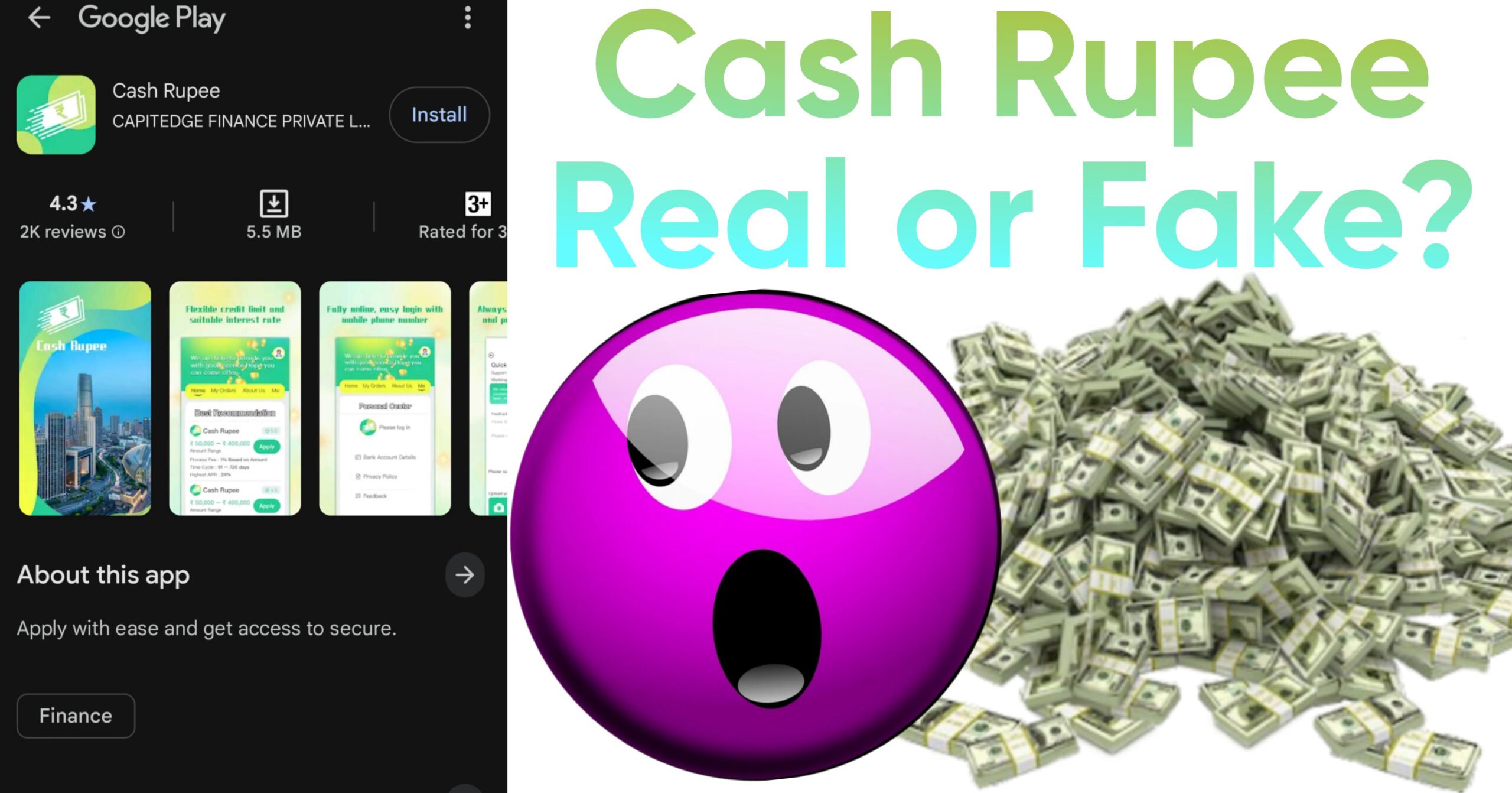
Cash Rupee Loan App Real or Fake?Cash Rupee Loan App Review 2025:
In the rapidly evolving world of digital lending, apps like Cash Rupee Loan App promise quick and easy access to loans, targeting individuals in urgent need of financial assistance. Marketed as a platform that connects borrowers with Century Vehicleloans Private Limited, an RBI-registered Non-Banking Financial Company (NBFC), Cash Rupee Loan App claims to offer secure and transparent loan services. However, a growing number of user reviews and complaints raise serious concerns about its legitimacy, transparency, and practices. This article dives deep into Cash Rupee’s operations, user experiences, and red flags to determine whether it is a trustworthy platform or a potential scam. By examining its app description, loan parameters, user reviews, and broader context of fake loan apps in India, we aim to provide a comprehensive analysis.

Understanding Cash Rupee Loan App: What the App Claims

According to its description, Cash Rupee Loan App is a digital platform that facilitates loans through Century Vehicleloans Private Limited, an RBI-registered NBFC. The app itself does not issue credit; instead, it acts as an intermediary, with all loan contracts, disbursements, and collections handled by the NBFC under applicable regulations. The app outlines the following core loan parameters:

  • Loan Amount: ₹50,000 to ₹400,000
  • Tenure: 91 to 720 days
  • Maximum Annual Percentage Rate (APR): 24%
  • Processing Fee: 1% of the sanctioned principal
  • GST on the Fee: 18%
  • Borrower Age Range: 20–60 years

To illustrate, the app provides a representative cost example for a ₹250,000 loan for 180 days at the maximum APR of 24%:

  • Processing Fee: ₹2,500 (1% of ₹250,000)
  • GST on the Fee: ₹450 (18% of ₹2,500)
  • Amount Credited: ₹247,050 (₹250,000 – ₹2,500 – ₹450)
  • Interest: ₹29,589 (calculated as ₹250,000 × 24% × 180/365)
  • Total Repayment: ₹279,589 (₹250,000 + ₹29,589)

On the surface, these terms appear transparent, with clear details about interest rates, fees, and repayment calculations. The association with an RBI-registered NBFC like Century Vehicleloans Private Limited further suggests legitimacy, as RBI registration implies regulatory oversight and adherence to fair lending practices. However, user reviews and reported experiences paint a starkly different picture, raising questions about whether Cash Rupee lives up to its claims.

Know about 7 Day loan app:

User Reviews: A Troubling Pattern of Complaints

A closer look at user reviews from 2025 reveals a consistent pattern of allegations that point to potential fraudulent practices. Here are some of the key complaints:

  1. No Repayment Option:
  • A review from July 11, 2025, describes Cash Rupee as a “total fraud app” with no functional repayment option. The reviewer notes that the repayment button on the app’s payment screen is not clickable, leaving users with only one option: extending the loan repayment date for double the amount. This lack of a repayment mechanism is a significant red flag, as legitimate loan apps are required to provide clear and accessible repayment options under RBI guidelines.
  1. Blackmail and Harassment:
  • Multiple reviews, including those from July 15, July 20, and July 23, 2025, accuse Cash Rupee’s recovery agents of using abusive tactics, including blackmail and threats to share manipulated or nude images with borrowers’ contact lists. For instance, Antony Nobleson (July 20, 2025) recounts being blackmailed by a recovery agent who demanded repayment but failed to update the app after receiving payment. Another user (July 23, 2025) reports threats to send nude pictures to their contacts if they refused to pay via unverified UPI IDs. Such coercive tactics are illegal under RBI regulations, which prohibit harassment and misuse of personal data.
  1. Fraudulent Transactions and Lack of Transparency:
  • A reviewer from July 15, 2025, alleges that an agent instructed them to send repayment to a provided link because the app’s repayment link was not working. After making the payment, the agent blocked the user, and the payment was not reflected in the app, leaving the loan status as overdue. Another user (July 25, 2025) claims they never received a loan but were shown as having an active loan, followed by blackmail demands. These experiences suggest potential fraud, where payments are collected through unofficial channels without updating loan records.
  1. Suspicious Contact Numbers:
  • Pankaj Patwal’s review (July 15, 2025) highlights that calls from recovery agents often originate from international numbers, including those from Pakistan. This raises concerns about the app’s operations, as legitimate RBI-registered NBFCs typically operate within India and use local contact numbers. The use of foreign numbers aligns with tactics employed by illegal loan apps, many of which operate from abroad to evade Indian regulators.
  1. Lack of Customer Support:
  • Users frequently report that Cash Rupee provides no reliable customer support. The app lists only an email address for contact, with reviewers claiming that emails go unanswered. This lack of responsive customer service violates RBI guidelines, which mandate accessible grievance redressal mechanisms for borrowers.
  1. Suspiciously Positive Reviews:
  • The reviewer from July 11, 2025, alleges that all 4- and 5-star ratings for Cash Rupee are paid, suggesting that positive reviews may be fabricated to boost the app’s credibility. This is a common tactic among fraudulent apps to mislead users into trusting them.

Red Flags: Why Cash Rupee Raises Concerns

The user reviews align with broader warning signs associated with fake or predatory loan apps in India. Here’s a detailed analysis of the red flags:

  1. Lack of Functional Repayment Mechanism:
  • The absence of a clickable repayment button is a serious violation of RBI guidelines, which require lenders to provide clear and accessible repayment options. Forcing users to extend loans at double the cost suggests predatory practices designed to trap borrowers in a cycle of debt.
  1. Harassment and Blackmail Tactics:
  • The reported use of blackmail, threats, and abusive language by recovery agents mirrors the modus operandi of illegal loan apps. According to a 2023 Al Jazeera report, predatory loan apps often access borrowers’ contacts and media files to manipulate images and blackmail users for repayment. Such tactics are explicitly prohibited by the RBI, which limits lenders’ data access to minimal personal details like name, address, and contact information.
  1. Unverified RBI Registration:
  • While Cash Rupee claims to partner with Century Vehicleloans Private Limited, an RBI-registered NBFC, there is no publicly available evidence in the provided information to confirm the legitimacy of this NBFC or its association with the app. Legitimate apps typically provide clear details about their NBFC partners, including registration numbers verifiable on the RBI’s official website. The lack of transparency about Century Vehicleloans Private Limited raises doubts about its authenticity.
  1. International Operations:
  • The use of foreign phone numbers, particularly from Pakistan, suggests that Cash Rupee may operate outside India’s regulatory framework. A 2020 report by The Hindu noted that many fraudulent loan apps are controlled by foreign entities, including Chinese nationals, who use Indian fronts to evade detection. This aligns with user reports of international calls and raises concerns about accountability.
  1. Lack of Customer Support:
  • The absence of responsive customer support, with only an unresponsive email address provided, is a hallmark of fraudulent apps. RBI guidelines mandate that lenders maintain accessible grievance redressal mechanisms, including phone numbers and physical addresses. Cash Rupee’s failure to provide these suggests non-compliance with regulatory standards.
  1. Unsolicited Loans and Hidden Charges:
  • Reports of users being shown as having active loans without receiving funds indicate potential fraud. Additionally, the practice of directing payments to unverified UPI IDs or links outside the app suggests hidden charges or scams, as legitimate lenders deduct fees from the loan amount rather than requesting upfront payments.

Broader Context: The Rise of Fake Loan Apps in India

The issues with Cash Rupee are not isolated but part of a larger problem with fake loan apps in India. According to a 2025 article by BuddyLoan, fake loan apps often lure users with promises of quick loans and minimal documentation, only to engage in data theft, harassment, and financial fraud. The RBI has taken steps to curb this menace, banning apps like Kredipe, FlyCash, and Rupee Master in 2024 for unauthorized operations, high interest rates, and data misuse. In 2023 alone, the RBI reported over 600 illicit loan apps, many of which used aggressive recovery tactics.

Google and Apple have also removed thousands of non-compliant apps from their stores, but fraudulent apps continue to proliferate, often disguised as legitimate platforms. A 2022 report by The420.in listed 274 fake loan apps under RBI and police scrutiny, including names like Cash Host, Rupee Ok, and Flash Rupee. While Cash Rupee is not explicitly listed, its reported practices align closely with those of banned apps.

How to Verify a Loan App’s Legitimacy

To protect yourself from apps like Cash Rupee, consider the following steps recommended by the RBI and financial experts:

  1. Check RBI Registration: Verify if the app is associated with an RBI-registered NBFC or bank. Cross-check the NBFC’s registration number on the RBI’s official website (www.rbi.org.in).
  2. Read User Reviews: Look for consistent patterns in reviews. Negative feedback about harassment, non-functional repayment options, or data misuse is a red flag. Be wary of apps with suspiciously positive reviews.
  3. Examine App Permissions: Legitimate apps require minimal permissions for KYC verification (e.g., camera or location access). Avoid apps that demand access to contacts, call logs, or media files.
  4. Verify Contact Information: Legitimate apps provide clear contact details, including a physical address and customer service number. Lack of such information is a warning sign.
  5. Report Suspicious Apps: If you encounter issues, report the app to the RBI’s Sachet portal (sachet.rbi.org.in) or the National Cyber Crime Reporting Portal (cybercrime.gov.in). You can also file a police complaint for harassment or fraud.

Conclusion: Is Cash Rupee Legit or a Scam?

Based on the available evidence, Cash Rupee exhibits multiple characteristics of a potential scam. The lack of a functional repayment option, reports of blackmail and harassment, use of international phone numbers, unresponsive customer support, and unverified claims of RBI registration raise serious concerns. While the app’s description and loan parameters appear professional, user reviews from 2025 consistently highlight predatory practices that violate RBI guidelines and align with tactics used by illegal loan apps.

For comparison, legitimate RBI-approved apps like PaySense, MoneyTap, and Fibe provide transparent terms, responsive customer support, and verifiable NBFC partnerships. Cash Rupee’s reported practices, such as forcing loan extensions, demanding payments through unofficial channels, and threatening borrowers, suggest it may be operating outside India’s regulatory framework.

If you are considering using Cash Rupee, exercise extreme caution. Verify Century Vehicleloans Private Limited’s RBI registration, avoid sharing sensitive data, and report any suspicious activity to the RBI or cybercrime authorities. For safer alternatives, opt for well-established, RBI-approved apps with positive user feedback and clear regulatory compliance. In the digital lending landscape, vigilance is key to avoiding financial scams and protecting your personal information.


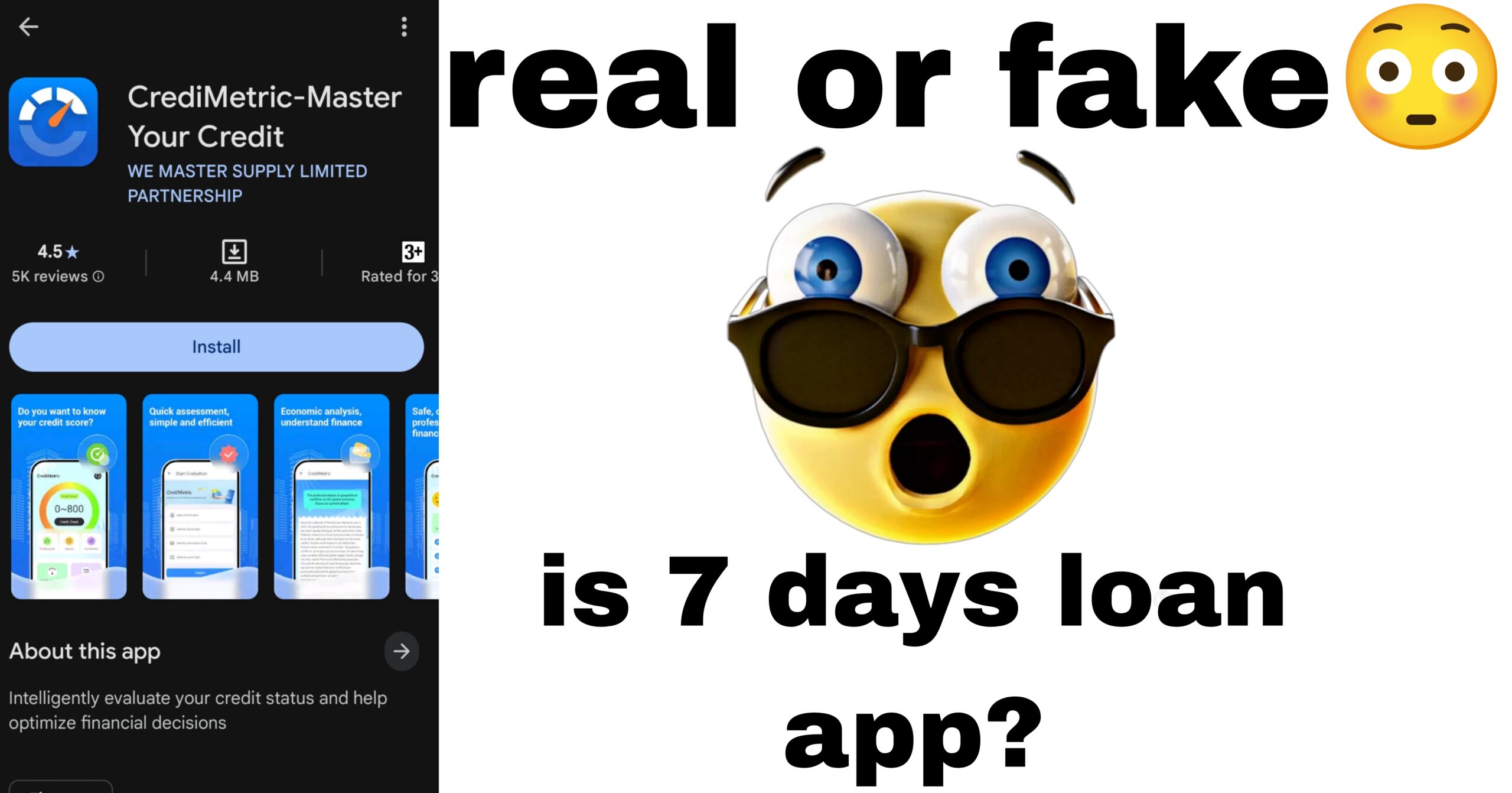
Credimetric loan app
CrediMetric Loan App: Real or Fake? Credimetric loan app Reality

In today’s digital age, financial tools and apps promising quick credit score evaluations, loan approvals, and financial optimization are abundant. One such platform, CrediMetric, markets itself as a “credit scoring tool designed for individual users to help you gain a deeper understanding of your credit performance.” It claims to offer fast, accurate credit scoring, personalized financial advice, and robust data security. However, user reviews and online discussions paint a troubling picture, raising serious concerns about the app’s legitimacy. This article critically evaluates CrediMetric, analyzing its claims, user reviews, and compliance with regulatory standards like those set by the Reserve Bank of India (RBI). With over 1,000 words, we aim to expose whether CrediMetric is a genuine financial tool or a potential scam

Credimetric loan app

What is CrediMetric?

According to its official description, CrediMetric is a credit scoring tool that leverages “advanced data processing technology” to analyze multi-dimensional credit data and provide users with clear, easy-to-understand credit scores and detailed reports. It positions itself as a trusted assistant for both credit novices and those looking to optimize their credit records. The app claims to offer the following key features:

  1. Credit Score Query: Real-time access to your current credit score and trends.
  2. Credit Details Report: Key insights into financial reports.
  3. Personalized Credit Optimization Suggestions: Tailored strategies to improve credit status.
  4. Data Security: Multiple encryption technologies to protect user information.
  5. Professional Customer Support: Assistance via email and during specified working hours.

CrediMetric emphasizes that it is an independent third-party platform, not affiliated with any financial institution, and does not intervene in transactions or disputes. Its parent company, WE MASTER SUPPLY LIMITED PARTNERSHIP, is reportedly based in Renu Nakhon, Nakhon Phanom, Thailand, with a customer service email (visitor@wemastersupply.com) and operational hours from Monday to Saturday, 9:00 AM to 6:00 PM.

Despite these claims, user reviews and online feedback suggest that CrediMetric may not live up to its promises and could potentially be a fraudulent loan app. Let’s dive into the evidence.


User Reviews: A Pattern of Complaints

The user reviews for CrediMetric on platforms like the Google Play Store reveal a consistent pattern of negative experiences, with many labeling the app as a scam. Here’s a detailed breakdown of the concerns raised by users:

  1. High Hidden Fees and Predatory Lending Practices:
  • A user named Sahil Saju reported receiving only ₹2,800 out of a ₹4,700 loan, with the remainder likely deducted as undisclosed charges. The repayment period was an unreasonably short one week, leading to regret and distrust. This suggests that CrediMetric may engage in predatory lending practices, where a significant portion of the loan is withheld as fees, a common tactic among fraudulent loan apps.
  1. Allegations of Fraud and Extortion:
  • Dooaanque Rao warned that CrediMetric is a “totally fraud devil” app, claiming it offers small loan amounts (e.g., ₹2,000) but demands significantly higher repayments (e.g., ₹4,500). For larger loans, such as ₹100,000, users reportedly receive only ₹40,000–₹50,000 but are required to repay the full amount. This aligns with the modus operandi of illegal loan apps, which lure users with promises of quick cash but impose exorbitant interest rates and hidden fees that exceed RBI guidelines.
  1. Not RBI Registered:
  • Multiple reviews, including those by Dooaanque Rao and others, explicitly state that CrediMetric is not registered with the RBI, a critical red flag in India. Legitimate lending apps must be associated with RBI-regulated Non-Banking Financial Companies (NBFCs) or banks to operate legally. The absence of RBI registration suggests that CrediMetric may be operating outside India’s financial regulatory framework, increasing the risk of fraud.
  1. Data Theft Concerns:
  • Konala Eswar labeled CrediMetric a “fake app” and a “Chinese loan app” involved in “data chori” (data theft). This accusation is particularly concerning given the app’s claim of using “multiple encryption technologies” to protect user data. Illegal loan apps often request excessive permissions, such as access to contacts, call logs, or media files, which can be used for harassment or blackmail.
  1. General Scam Allegations:
  • Suman Saurabh Nanda called CrediMetric a “fake and scam app” and urged its removal from the Play Store. This sentiment is echoed across multiple reviews, with users warning others to avoid the app due to its deceptive practices.

Despite these negative reviews, CrediMetric maintains a surprisingly high 4.5-star rating on the Play Store, which raises suspicions of manipulated or fake reviews. Many fraudulent apps artificially inflate their ratings by posting positive reviews, often from non-Indian accounts, as Dooaanque Rao pointed out, noting that many reviewers appear to be from Pakistan or other countries.


CrediMetric’s Claims vs. Reality

Let’s evaluate CrediMetric’s claims against the backdrop of user reviews and regulatory standards:

  1. Fast and Accurate Credit Scoring System:
  • CrediMetric claims to provide real-time, accurate credit scores. However, there’s no evidence in the reviews or online discussions to confirm that the app delivers reliable credit scoring. Instead, users focus on its loan offerings, which appear to be the primary function, suggesting that the credit scoring feature may be a facade to lure users into applying for loans.
  1. Exclusive Credit Optimization Guide:
  • The app promises personalized strategies to improve credit status, but no user reviews mention receiving such guidance. Instead, complaints center on loan-related issues, indicating that this feature may be exaggerated or non-existent.
  1. Complete Data Security and Privacy Protection:
  • CrediMetric’s claim of robust data security is directly contradicted by user accusations of data theft. Illegal loan apps often misuse personal information, such as Aadhaar or PAN details, for unauthorized transactions or harassment. The app’s Thailand-based parent company further raises concerns, as it may not be subject to Indian data protection laws.
  1. Professional Customer Support:
  • There’s no mention in user reviews of effective customer support. Given the allegations of harassment and fraud, it’s unlikely that CrediMetric provides responsive or professional assistance. The provided email (visitor@wemastersupply.com) and limited working hours further limit accessibility.
  1. Independence from Financial Institutions:
  • While CrediMetric claims to be an independent platform, its loan offerings suggest it operates as a lending app, which requires RBI registration in India. The lack of transparency about its regulatory status and partnerships with NBFCs or banks is a major concern.

Is CrediMetric RBI Registered?

One of the most critical factors in determining the legitimacy of a financial app in India is its registration with the RBI. The RBI regulates all lending operations, and legitimate apps must be backed by RBI-registered NBFCs or banks. According to user reviews and available information, CrediMetric is not RBI registered, a claim that aligns with the broader issue of illegal loan apps in India.

The RBI has been actively addressing the rise of fraudulent loan apps, with over 600 illegal apps identified in 2023 alone. These apps often operate outside regulatory oversight, charge excessive interest rates, and engage in predatory practices like data theft and harassment. The RBI has proposed creating a repository of legitimate digital lending apps to help consumers identify unauthorized platforms, but no such list currently exists.

CrediMetric’s Thailand-based parent company, WE MASTER SUPPLY LIMITED PARTNERSHIP, further complicates its regulatory status. Many illegal loan apps, particularly those with ties to foreign entities (e.g., Chinese loan apps), operate outside India’s jurisdiction, making it difficult for authorities to take action.


Red Flags of a Fake Loan App

Based on RBI guidelines and expert insights, here are the red flags that align with CrediMetric’s operations:

  1. Lack of RBI Registration: CrediMetric’s failure to disclose any association with an RBI-registered NBFC or bank is a major warning sign. Legitimate apps like PhonePe or Fibe clearly state their regulatory affiliations.
  2. Excessive Fees and Short Repayment Periods: User reviews highlight hidden charges and unreasonably short repayment terms (e.g., one week), which violate RBI guidelines on fair lending practices.
  3. Data Privacy Concerns: Allegations of data theft and excessive permissions suggest that CrediMetric may misuse personal information, a common tactic among fraudulent apps.
  4. Foreign Operations: The Thailand-based parent company raises questions about jurisdiction and accountability. Many illegal apps operate from abroad to evade Indian regulators.
  5. Harassment Tactics: While not explicitly mentioned in the provided reviews, the broader context of illegal loan apps suggests that users who fail to repay may face abusive calls or blackmail, as seen in cases like UnicashX and Kreditbe.

How to Protect Yourself from Apps Like CrediMetric

To avoid falling victim to potentially fraudulent apps like CrediMetric, follow these steps:

  1. Verify RBI Registration: Check the RBI’s official website (rbi.org.in) or contact the app directly to confirm its association with an RBI-registered NBFC or bank.
  2. Read Reviews Critically: Look for patterns in user reviews, especially complaints about hidden fees, data theft, or harassment. Be wary of apps with suspiciously high ratings despite negative feedback.
  3. Avoid Sharing Sensitive Information: Never provide Aadhaar, PAN, or banking details unless the app’s legitimacy is verified. Legitimate apps require minimal permissions and use secure websites (HTTPS).
  4. Report Suspicious Apps: If you encounter a fraudulent app, report it to the National Cyber Crime Reporting Portal (cybercrime.gov.in), the RBI’s Sachet portal (sachet.rbi.org.in), or the National Consumer Helpline (14404).
  5. Stick to Reputable Platforms: Use RBI-approved apps like PhonePe, Fibe, or Tata Capital, which comply with regulatory guidelines and prioritize user security.

Conclusion: Is CrediMetric Real or Fake?

Based on user reviews, lack of RBI registration, and alignment with common traits of fraudulent loan apps, CrediMetric appears to be a fake or highly questionable platform. Its claims of providing accurate credit scoring and secure data protection are undermined by allegations of predatory lending, hidden fees, data theft, and foreign operations. The app’s high Play Store rating is likely manipulated, as the negative reviews from Indian users provide a more credible picture of its operations.

While CrediMetric markets itself as a credit scoring tool, its loan offerings and lack of transparency suggest it operates as an illegal lending app, potentially exploiting financially vulnerable users. The RBI’s ongoing efforts to combat such apps highlight the need for caution, and CrediMetric’s Thailand-based parent company further raises concerns about accountability.

If you’re considering using CrediMetric, proceed with extreme caution. Verify its legitimacy through official channels, avoid sharing sensitive information, and opt for RBI-approved alternatives. To protect others, report any suspicious activity to the RBI or cybercrime authorities. In the digital lending landscape, trust and regulatory compliance are paramount—qualities that CrediMetric, based on current evidence, sorely lacks.